
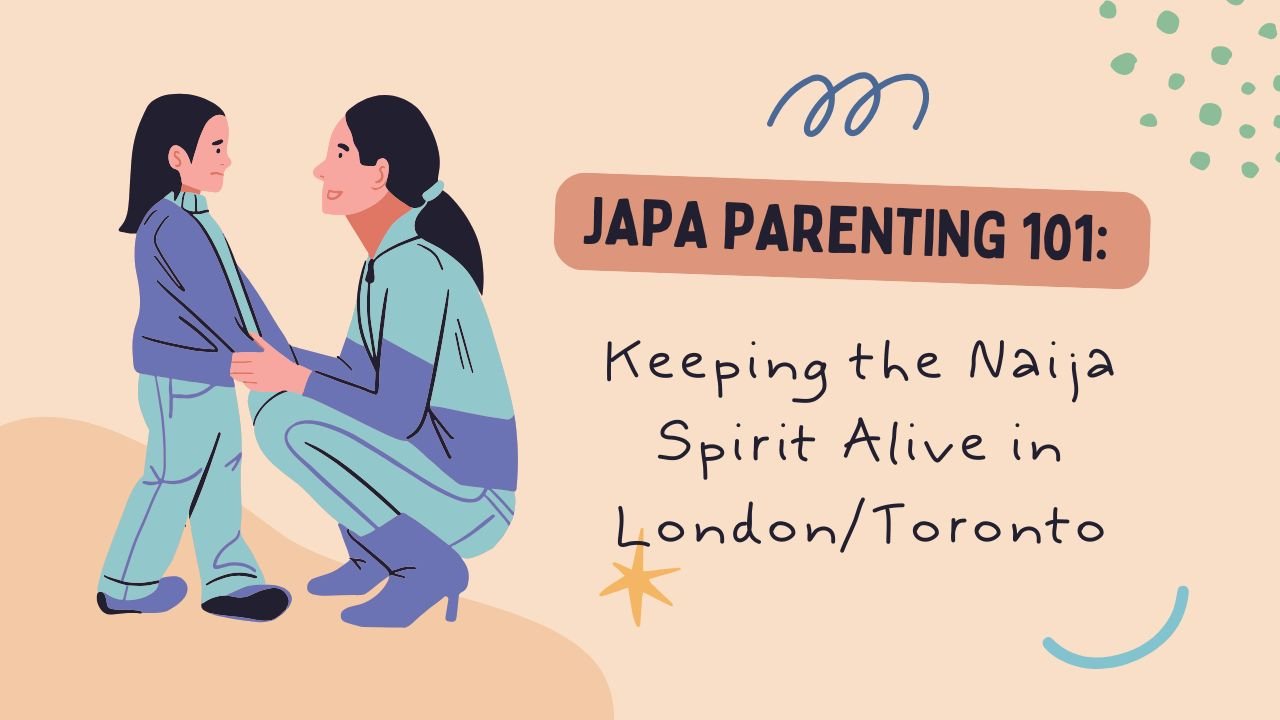
The Japa Parenting Reality
If you’ve ever watched your child correct your accent, refuse Nigerian food, or say “That’s weird” when you mention greeting elders properly, welcome to Japa Parenting.
This is the silent struggle many Nigerian parents in London and Toronto are living every single day.
You didn’t just relocate your body—you relocated your culture, your values, and your dreams. And now, you’re trying to raise children in a system that doesn’t look, sound, or think like the one that raised you.
Oya, let’s talk about how to do this properly—without losing your mind or your roots.
What Does “Naija Spirit” Really Mean?
The Naija spirit isn’t just about food, accents, or traditional clothes. It’s deeper than that.
It’s about:
- Respect
- Resilience
- Community
- Confidence
- Identity
It’s that inner fire that says, “I know who I am and where I come from.”
Your job as a Japa parent isn’t to recreate Nigeria abroad—it’s to transfer values, not geography.
Why Japa Parenting Is Not for the Weak
Culture Shock for Parents
Back home, culture was automatic.
Abroad, culture must be intentional.
Nobody reminds your child to greet elders. Nobody enforces respect. Nobody reinforces your values—except you.
That realization alone can be overwhelming.
Identity Confusion for Kids
Your child hears one message at home and another at school. One says, “Respect your elders.”
The other says, “Question authority.”
Without guidance, children end up confused, detached, or ashamed of their roots.
Language: The First Line of Cultural Defense
Why Mother Tongue Matters
Language isn’t just communication—it’s identity storage. When a child loses their language, they don’t just lose words; they lose context, history, and emotional connection.
Yoruba, Igbo, Hausa—Pick Your Weapon
You don’t need perfection. Even basic phrases help:
- Greetings
- Household instructions
- Expressions of emotion
Consistency beats fluency.
How to Teach Nigerian Languages Abroad
- Speak it at home, even if they reply in English
- Use music, cartoons, and bedtime stories
- Reward effort, not accuracy
Language sticks when it feels safe, not forced.
Food Is Culture: Raising Kids on Rice and Identity
Why Jollof Is More Than Food
Food is memory. Food is storytelling. Food is belonging. When your child eats Nigerian meals, they are consuming culture without realizing it.
Cooking Nigerian Meals Abroad Without Stress
- Simplify recipes
- Cook in batches
- Involve your kids in the kitchen
When children cook the food, they’re more likely to eat it—and own it.
Discipline vs. Western Parenting Norms
Respect Without Fear
Let’s be honest—some of us were raised with fear. That model doesn’t work abroad, and frankly, it shouldn’t.
Discipline should teach, not traumatize.
Setting Boundaries the Naija Way (Minus Trauma)
- Clear expectations
- Consistent consequences
- Calm explanations
Respect grows when children feel heard.
Faith, Values, and Moral Compass
Church, Mosque, and Community
Faith communities provide familiarity in foreign lands. They reinforce values you can’t teach alone.
Teaching Values at Home When Society Is Different
Your home must be the moral anchor. Talk about honesty, responsibility, kindness, and integrity—daily, casually, intentionally.
Community Is Everything
Finding Nigerian Communities in London and Toronto
From cultural associations to WhatsApp groups, community matters. Children need to see people who look like them thriving.
Why “Aunties and Uncles” Still Matter
Extended family teaches accountability. Even abroad, children need multiple role models—not just parents.
Education: Balancing Excellence and Mental Health
African Expectations vs. Western School Systems
Yes, excellence matters. But so does emotional safety. Push without crushing. Encourage without comparing.
Teaching Grit Without Pressure
Praise effort, not just results. Teach persistence, not perfection.
Raising Proud, Not Confused, Nigerian Kids
Helping Children Own Their Dual Identity
Your child is not “less Nigerian” because they were born abroad. They are globally Nigerian.
Answering the “Where Are You Really From?” Question
Teach them to answer confidently:
“I’m Nigerian-Canadian.”
“I’m British-Nigerian.”
Identity is power when owned.
Digital Naija: Using Media to Reinforce Culture
Nigerian Books, Cartoons, and Music
Curate content that reflects their heritage. Representation matters more than you think.
Screen Time That Builds Identity
Not all screen time is bad. Make it intentional.
Common Mistakes Japa Parents Make
Over-Assimilation
Trying too hard to “fit in” can erase identity.
Over-Control
Trying too hard to “preserve culture” can push children away.
Balance is the secret sauce.

Real-Life Japa Parenting Scenarios
At School
Teach children confidence, not defensiveness.
At Home
Create safe spaces for questions and mistakes.
In Public Spaces
Model behavior—you are their first example.
The Long-Term Goal of Japa Parenting
Raising Global Nigerians
Children who can walk into any room and belong.
Children Who Can Belong Anywhere
Rooted at home. Respected abroad.
Conclusion: Passing the Baton, Not the Burden
You’re not raising children just to survive abroad—you’re raising ambassadors of culture. The Naija spirit doesn’t survive by accident; it survives through intentional parenting.
Well done, Mama. Well done, Baba. You’re doing better than you think.
FAQs
1. Is it possible to raise culturally grounded Nigerian kids abroad?
Yes, with consistency, intention, and patience.
2. Should I force my child to speak my native language?
Encourage, don’t force. Safety creates fluency.
3. How do I balance discipline with Western norms?
Use explanation, boundaries, and respect—not fear.
4. What if my child rejects Nigerian culture?
Stay calm. Identity evolves. Keep the door open.
5. Is community really that important?
Absolutely. Culture grows faster in groups.